2009 Pulitzer Prize in History winner, African-American historian and attorney Prof Annette Gordon-Reed, author of The Hemingses of Monticello, and In 2017, Most Blessed of the Patriarchs, another bestseller about the third US President, Thomas Jefferson, and the main writer of the Declaration of Independence, and lifelong enslaver. Those he enslaved included several of his own children by an enslaved woman on his plantation.
Award-winning journalist and Professor Nikole Hannah-Jones’ Project 1619:A New Origin Story, published in 2019.
Professor Jarvis Givens, Fugitive Pedagogy: Carter G. Woodson and the Art of Black Teaching (2021) and American Grammar: Race, Education and the Building of a Nation (2025).
Journalist and Radio host Clay Cane published in 2024, The Grift: Black Republicans from the Party of Lincoln to the Cult of Trump is a masterful cataloguing of the arguments and actions of Black so-called conservatives over nearly 200 years. This is an enlightening work that brings together the words, writings and actions of those who benefit financially and otherwise from discrediting progressive Black movements.
Karida L Brown published The Battle for the Black Mindin 2025, clarifying the activities of the Tuskegee Institute and its program of Industrial Education / vocational training that also refrained from directly challenging Jim Crow segregation and undermined Black educational programs that pursued liberal arts education.
Jasmine L Holmes published, Crowned with Glory, in 2023 – with primary sources in their own words from those enslaved and free throughout history, who fought to display the Image of God in Black men and women, despite the horrors of enslavement.
And, closest to home are the historical writing of my husband, Warren, and the memoir of my college collaborators and me. Warren L. Maye (2008). Soldiers of Uncommon Valor: The History of Salvationists of African Descent in the United States is the definitive documentation of the contributions of Blacks in the Salvation Army movement from its inception in the United States until the time of this publication.
Finally, I and seven co-authors published our group memoir about our student activism at the college we attended in the Sixties: Seven Sisters and a Brother: Friendship, Resistance and Untold Truths Behind Student Activism in the 1960s. The coauthors: Marilyn Allman Maye, Harold S Buchanan, Jannette Domingo, Joyce Frisby Baynes, Marilyn Holifield, Myra E Rose, Bridget Van Gronigen Warren, Aundrea White Kelley.
We Proclaim It! Black History Month 2026 A Century of Black History Commemorations
In 1926, during the nadir of Black history, Dr. Carter G. Woodson—the founder of the Association for the Study of African American Life and History (ASALH), the son of formerly enslaved parents, a former sharecropper and miner, and the second Black person to receive a Ph.D. from Harvard University—launched the first Negro History Week. He intentionally chose February because the Black community had already set aside the birthdays of Abraham Lincoln (February 12) and Frederick Douglass (February 14) to recognize and celebrate their contributions to emancipation and abolition.
The goal of Negro History Week was to study, teach, and promote the significant contributions that Black people had made to American society. From our writers to our inventors, our politicians to our teachers, our artists to our musicians—it was designed to document our lives from American slavery to freedom and to fill the historical gaps deliberately overlooked to miseducate our children. In 1976, Negro History Week, which by then had evolved into Black History Month, was officially recognized and proclaimed by President Gerald Ford. We are now at a moment where we are celebrating a century of Black History Commemorations—50 years of Negro History Week and 50 years of Black History Month.
America is a complicated place. It is, as Dr. Charles H. Long once asserted, a “hermeneutical situation,” in that it is diverse and complex. Its history is both beautiful and bloody. The study of it requires constant and continuous interpretation, upkeep, meaning-making, and evaluation. The understanding of it requires us, as Black people, to see ourselves and our history only through our eyes and not, as W.E.B. Du Bois argued, simultaneously through our eyes and through the eyes of an oppressive, dominant white culture. We must move beyond both the white gaze and the fragmentation (the idea of “two souls, two thoughts, two unreconciled strivings” fighting to exist in one body) that comes from double consciousness and into a space where we fully recognize who we are and what we have contributed to this country.
We built this country. We tamed the land, and we cultivated the crops. Our unpaid labor and the buying and selling of our bodies are the cornerstone of America and of American capitalism. Our blood is mixed with the soil, and the wind carries forward our tears of both sorrow and joy. We fought in the wars for democracy abroad and at home. James Baldwin once wrote, in an open letter to Bishop Desmond Tutu, that the fight for Black freedom makes white freedom possible. “Indeed,” he notes, “our freedom, which we have been forced to buy at such a high price, is the only hope of freedom that they have.” To celebrate America at this moment requires us to fully situate ourselves within the narrative, not as a footnote, but as main characters who have helped shape this American experience and the American story.
Black history is American History, and as we have done every year since 1926, we will proclaim and celebrate Black History Month!
Our 2026 theme is A Century of Black History Commemorations, and it is fitting for this moment that we take time to look back so we can push back and push forward. We stand in the House of Woodson, and just as he did, with the work of so many others, we will uplift our history. We will protect it. We will promote it. And we will preserve it. We will plant our trees of truth, the ones that tell our story, right beside where they are planting their trees of lies, the ones that seek to erase and distort our story. We will teach our children, future generations, how to choose the path of truth and how to stand tall in moments of adversity, how to bring clarity in moments of confusion, and how to choose and embrace love instead of hate.
Black History Month belongs to us—we do not celebrate because they see us, we celebrate because we see ourselves. We do not ask for permission to center ourselves; we write the stories where we are centered, and then we tell that story. We do not sing songs of freedom because they are playing the music; we sing because we are the music makers, and we carry the songs of our ancestors and bring that music to our people. We do not wait for anyone to write our story; our history has already been written, as we are the history seekers and the truth speakers. NOW THEREFORE, I, KARSONYA WISE WHITEHEAD, National President of the Association for the Study of African American Life and History, on behalf of the Executive Council and the ASALH members, do hereby acknowledge and recognize FEBRUARY 2026 AS BLACK HISTORY MONTH and urge everyone to recognize and observe this month by hosting and/or participating in Black History Month activities, and by taking up the shared work of protecting, promoting, and preserving Black History as a significant part of the American story.
Dr. Karsonya (Kaye) Wise Whitehead is the 30 th person and the eighth woman to serve as the national president of ASALH. She is a professor of Communication and African and African American Studies at Loyola University Maryland and the host of the award winning radio show “Today with Dr. Kaye” on WEAA, 88.9 FM.
Association for the Study of African American Life and History | 301 Rhode Island Avenue, NW Suite 1508 | Washington, DC 20001 US
2011 is one hundred years after the time that many of our ancestors first came to places like New York City, where I was born. Some came from overseas, others came from the southern United States. They didn’t think of themselves as pioneers in a historic movement of peoples who would re-shape the urban centers for decades to come. But, that’s exactly what they did.
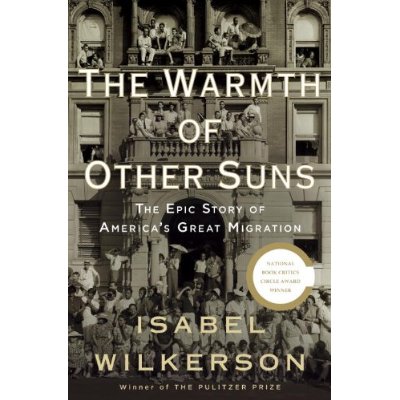
One of two books that capture this historic movement is Isabel Wilkerson’s The Warmth of Other Suns, a phenomenal, destined-to-become-classic of Grapes of Wrath proportions. It’s a must-read for every African-American, and black or wihte immigrant from anywhere.
There are many stereotypes about the hard-working, closely-knit-to-family, education-focused immigrant families; but, these images are rarely tied to people of the Black migrations from the U.S. South. When migrants left the Jim Crow South, de facto segregation in the North and West meant that they were restricted to living indistinguishably among other blacks who had been in those places a lot longer. They were stereotyped by both blacks and whites alike, and a lot of misinformation was spread about them. But, modern scholarship has shown that they were just like all other migrant or immigrant groups, who had left everything to relocate to a strange and alien place. They had all the drive, ambition, sense of loss, determination to succeed, desire for education for the their children, that other immigrants tend to have. Isabel Wilkerson provides the evidence, and does it through real-life stories of three black migrant families, one moving to New York City, one to Chicago, and one to Los Angeles.
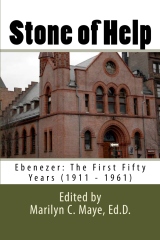
Ms. Wilkerson’s book became an inspiring resource for me, as I worked on a new project, Stone of Help. Part history, part memoir, the new work documents the real-life experiences of black migrants from the Caribbean who came to Harlem and Brooklyn, New York, at the time as the African-American migration from the South reached the same communities. The characters in Wilkerson’s story reflect so much of the experience that my collaborators and I thought was unique to black migrants from abroad.
Stone of Help tells of one church community, the Ebenezer Gospel Tabernacle, and their spiritual offspring, and so, covers a narrower swath of the epic sweep of Ms. Wilkerson’s story, (which I understand took her 15 years to complete). Stone of Help is a little over 100 pages in length, and can be read in one or a couple of sittings. It focuses more on the spiritual history than does Warmth of Other Suns; but the sociological phenomena are very similar.
The people you encounter in Stone of Help settled in Harlem, in not so welcoming times. They decided to build a church, rather than adopt the city ways. There are funny anecdotes about the juxtaposition of Caribbean andNew York cultures, as seen through the eyes of the immigrants’ offspring. There are sobering discussions about the black church and the challenges of survival it faces after hundred years.
People of all backgrounds need to understand that the stereotypical views of the history of black people in the United States are just that, stereotypes. There is much more diversity and nuance to our experiences. Even within the same extended family, some migrated, some did not. And, the differences in outcomes can be massive.
In the interest of deeper understanding of who we are and how we came to be here, let’s commit to reading more about the migrations of our own families and our neighbors’.
The proceeds from your purchase of Stone of Help will go towards sustaining the Harlem landmark as it enters its second century. Click here: www.createspace.com/3616298

 Rainmaking, Unlimited